
It is cold outside, you turn up the thermostat, and nothing happens. The furnace does not kick on, no warm air comes through the vents, and you are standing in a house that is getting colder by the minute. Before you call an HVAC company and wait two days for a service appointment, there is a solid chance you can find and fix the problem yourself in under 30 minutes.
Most furnaces that suddenly stop working have one of a handful of causes, and the majority of them are easy to check without any technical background. This guide walks through each one in order, starting with the checks that solve the most cases and working toward the less common problems that need a professional.
One safety note before starting: If you smell gas anywhere near the furnace or elsewhere in the house, do not touch any switches or outlets. Leave the house immediately and call your gas company from outside. Do not re-enter until they clear it.
What Happens When a Furnace Starts Normally
Knowing what a healthy startup sequence looks like helps you spot exactly where yours is going wrong. When the thermostat calls for heat, a properly working furnace follows a specific sequence. The inducer fan starts up first to clear combustion gases from the heat exchanger. Then the igniter glows or sparks. Gas opens and ignites. The flame sensor confirms there is a steady flame. The blower motor starts and pushes warm air through the ducts. The whole sequence from thermostat call to warm air at the vents takes about 30 to 90 seconds.
If your furnace is completely silent with no sounds at all, the problem is likely power, the thermostat, or the furnace switch. If it starts the sequence but shuts off before warm air arrives, you are probably dealing with a dirty flame sensor, a clogged filter, or an ignition failure. If it runs but the air coming out is not warm, that is a separate issue with the burners or gas supply. Each of those paths leads you to a different section below.
Step 1. Check the Thermostat Before Anything Else
This sounds too simple to mention, but thermostat issues account for a surprising number of furnace not turning on calls, and they are worth checking carefully before touching anything on the furnace itself.
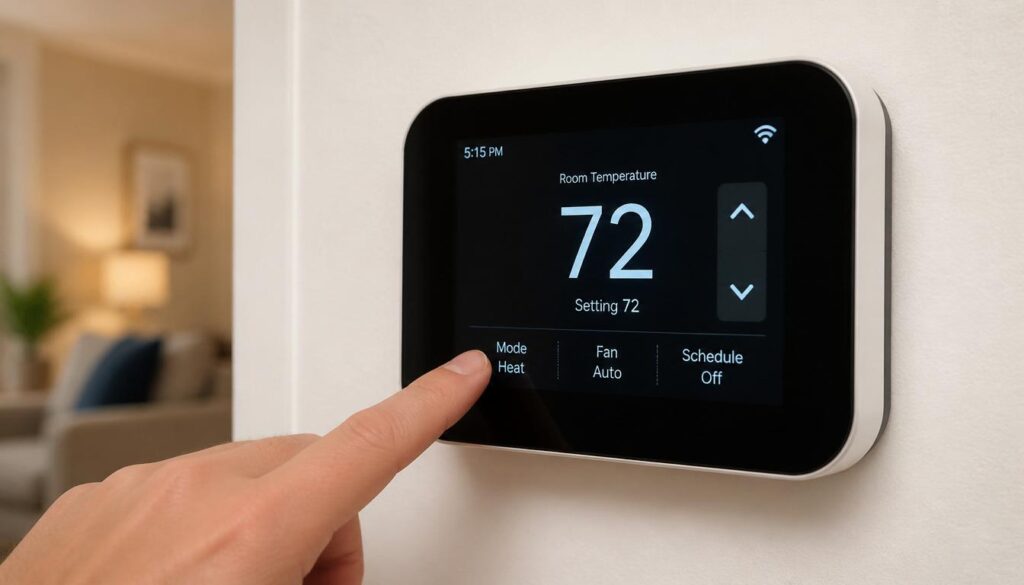
First, make sure the thermostat is set to Heat, not Cool or Fan Only. Then confirm the set temperature is at least three to five degrees higher than the current room temperature. A thermostat set to 68 degrees in a 69-degree room will not call for heat regardless of how many times you press the button.
If the thermostat display is blank or the screen is not responding, replace the batteries even if you think they are fine. A thermostat that is losing battery power sometimes operates the display normally until the last moment, and low batteries can prevent the thermostat from sending a signal to the furnace even when the screen looks normal.
For programmable or smart thermostats, check whether a schedule or hold mode is overriding your manual setting. A vacation hold, an eco mode, or a geofencing setting that thinks you are away from home can keep the furnace from running down to your target temperature. Disable any holds and set the thermostat manually to confirm whether the furnace responds.
If the thermostat display is working, the settings look correct, and the furnace still does not respond within a couple of minutes, move to the next step.
Step 2. Check the Furnace Power Switch and Circuit Breaker
Every furnace has a dedicated power switch that looks almost identical to a standard light switch, usually mounted on the wall near the unit or on the furnace itself. It is easy to accidentally switch off, especially in utility rooms and basements where it can get bumped during other work. Confirm it is in the ON position.
Also check the front panel or access door on the furnace. Most furnaces have a safety switch on the blower compartment door that cuts power to the unit if the door is not fully closed and latched. A panel that is slightly ajar, or one that was not fully seated after a filter change, will prevent the furnace from running entirely.
Next, go to your electrical panel and find the breaker labeled Furnace, Heating, or HVAC. Check whether it has tripped to the middle position. Even if it appears to be on, flip it all the way to OFF and then back to ON to reset it fully. A partially tripped breaker can look like it is on while not actually supplying power to the circuit.
If the breaker trips again immediately after you reset it, stop and leave it off. A breaker that will not stay reset means the circuit has a fault that needs diagnosis before the furnace is powered back up. More on when to call for help is covered at the end of this guide, and if you are seeing repeated breaker issues in other parts of the house too, the full breakdown of causes is in this guide on circuit breaker keeps tripping.
Step 3. Replace the Air Filter
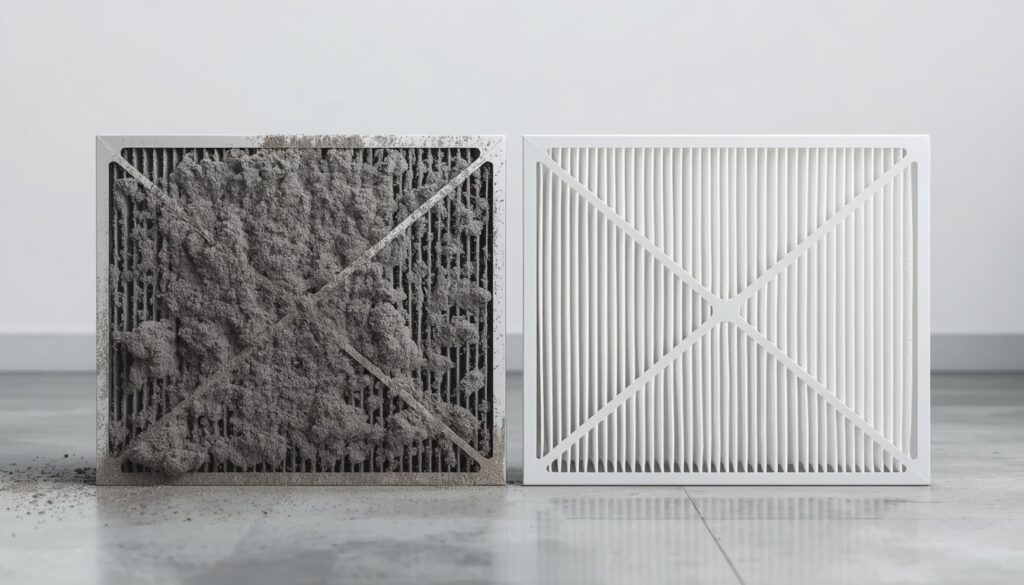
A dirty air filter is one of the most common causes of a furnace that starts and then immediately shuts back down, and it is also one of the most overlooked. Here is why it causes the furnace to stop working entirely: when the filter is clogged, airflow over the heat exchanger drops significantly. The heat exchanger temperature rises until a safety device called the high-limit switch trips and shuts the furnace off to prevent overheating and potential damage. The furnace may try to restart a few times before locking out completely.
Pull the filter out from its slot and hold it up to a light. If you cannot see light through it, or if it looks visibly gray and packed, replace it now before doing anything else. A new filter costs $5 to $20. After installing a clean filter, reset the furnace by turning its power switch off for 30 seconds and back on, then give it a few minutes to restart.
Filters should be checked monthly during heating season and replaced every one to three months depending on filter type, whether you have pets, and how dusty your home tends to be. If yours has not been changed in more than three months, replace it regardless of how it looks.
Step 4. Check the Pilot Light or Ignition System
Whether you have an older furnace with a standing pilot light or a modern furnace with an electronic igniter, the furnace cannot produce heat if ignition fails. Which one you have depends on the age of the unit.
Older Furnaces With a Pilot Light
If your furnace was installed before approximately 1990, it likely has a standing pilot light, a small continuous flame that ignites the main burners when the thermostat calls for heat. Find the small access panel on the front of the furnace near the bottom. Open it and look for a small flame. If you do not see one, the pilot light is out.
To relight it, locate the gas control valve on the furnace and turn the knob to PILOT. Hold it down to allow gas to flow, then use a long lighter to ignite the pilot at the pilot opening. Keep holding the knob down for about 30 seconds after the flame catches, then slowly release it and turn the knob to the ON position. If the flame goes out as soon as you release the knob, the thermocouple, the safety sensor that keeps the gas valve open when a flame is present, may be faulty. A thermocouple replacement costs $15 to $25 in parts and is a job an experienced DIYer can handle, but it is also a quick and inexpensive repair for a technician.
If you smell gas while trying to relight the pilot, stop immediately. Turn the gas control knob to OFF and ventilate the area before attempting anything else.
Modern Furnaces With an Electronic Igniter
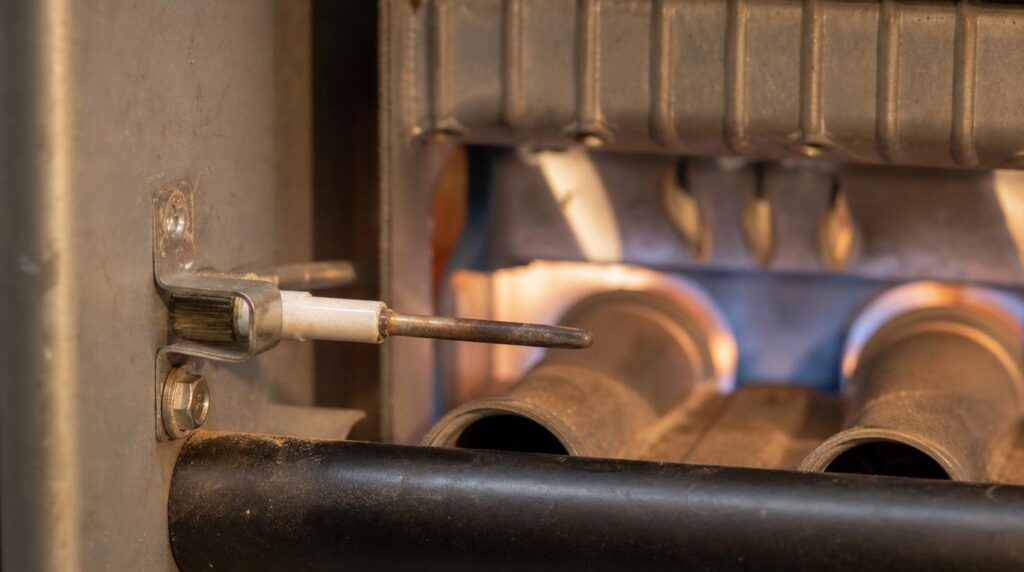
Furnaces made after about 1990 use either a hot surface igniter or a spark igniter rather than a standing pilot light. With a modern furnace, you will need a technician to open up the furnace to determine why the ignitor is not working. They will check for error codes on the control board and go from there. You can listen during startup to help diagnose the issue. If you hear the inducer fan run but no click or glow follows within about 30 seconds, the igniter itself may have failed. Igniters are fragile components, often made of silicon carbide, that crack from age and thermal stress. Replacement is not a complicated job mechanically but does involve working inside the furnace with gas components, so most homeowners defer this to an HVAC technician.
Step 5. Check the Gas Supply
If the igniter is working but the burners will not light, the furnace may not be getting gas. This is worth checking before assuming something is wrong with the furnace itself.
Locate the gas shutoff valve on the supply line that feeds the furnace. It is usually a lever-style handle on a pipe within a few feet of the unit. When the handle is parallel to the pipe, the valve is open. When it is perpendicular to the pipe, it is closed. Make sure it is fully open.
Then check whether other gas appliances in your home are working, your gas stove, gas water heater, or gas dryer. If none of them are working, you likely have a supply interruption from your utility provider rather than a furnace problem. Call your gas company. If other gas appliances work normally and only the furnace is not getting gas, the issue may be with the gas valve on the furnace itself, which is a component that needs professional diagnosis and replacement.
Step 6. Look for Error Codes on the Control Board
Most furnaces manufactured in the last 15 to 20 years have a diagnostic LED light on the control board that flashes a sequence of blinks to indicate the type of fault the furnace has detected. This is genuinely useful information and most homeowners never look for it.
Find the small window or peek hole on the access panel of the furnace, or open the panel carefully. Look for an LED light that is either solid or flashing in a pattern. Count the number of flashes in each sequence, then look up the code in the furnace owner’s manual or on the legend that is often printed on the inside of the access panel door. Common codes indicate a failed igniter, a tripped limit switch, a pressure switch fault, or a locked-out control board.
If the code says the furnace has locked out after too many failed ignition attempts, you can often reset it by turning the furnace power switch off for 30 seconds and then back on. This clears the lockout and allows the furnace to try the startup sequence again. If it locks out again within a few cycles, the underlying cause of the ignition failure needs to be found and addressed rather than continuing to reset.
Step 7. Check the Flame Sensor
The flame sensor is a small metal rod inside the furnace that confirms a flame is present after ignition. When it is coated with dust or carbon buildup, it cannot detect the flame reliably and shuts the gas valve as a precaution. The result is a furnace that starts, runs for two to five seconds, then shuts off. This repeats two or three times before the control board locks out the furnace entirely.
Cleaning the flame sensor is a task some homeowners handle themselves, but it requires shutting off power to the furnace, removing the sensor (it is held by one screw), and gently buffing the metal rod with very fine steel wool or a dry cloth. Do not use sandpaper, which is too abrasive. Reinstall the sensor, restore power, and test the furnace. A clean flame sensor that was causing repeated shutoffs will often resolve the problem completely.
If you are not comfortable opening the furnace and working near the burner assembly, this is a reasonable thing to hand to a technician. Flame sensor cleaning is usually a $75 to $150 repair and takes about 30 minutes for a professional.
Step 8. Check the Condensate Drain on High-Efficiency Furnaces
If you have a high-efficiency furnace, typically one rated at 90 percent or higher AFUE, it produces condensation as a byproduct of the combustion process. That water drains through a condensate line, usually a white PVC pipe, to a floor drain or condensate pump. When that drain line becomes clogged or the condensate pump fails, a float switch inside the drain assembly trips and shuts the furnace down as a safety measure to prevent water overflow.
Check the drain pan or condensate trap near the furnace for standing water. If the pan is full or you can see water that is not draining, that is likely why the furnace shut off. Clear the drain line by pouring a mixture of equal parts water and white vinegar through the access point on the condensate trap, the same approach used for a clogged AC condensate line. If you have a condensate pump, check that it is plugged in and running. Press the float up manually to see if the pump activates. If it does not, the pump needs to be replaced.
The same underlying issue of poor airflow and drainage maintenance affects both heating and cooling systems. If your furnace is running again and you also want to make sure the cooling side of your HVAC is in good shape for summer, the troubleshooting process for an AC not cooling the house covers the equivalent checks for your air conditioner and shares several of the same root causes.
Step 9. Reset the Furnace
After working through the checks above, a full furnace reset is worth doing before concluding that something is wrong that requires professional repair. Modern furnaces have control boards that can get stuck in a lockout state after a series of failed startup attempts, even if the underlying problem has since been resolved by your filter change or other fix.
To reset, turn the furnace power switch to OFF. Wait 30 seconds. Turn it back to ON. Give the furnace two to three minutes to run through its startup sequence. If it starts and runs normally, you are done. If it starts and shuts off again within a few seconds, the flame sensor or ignition system likely needs attention. If it does not start at all, and you have confirmed the thermostat, breaker, filter, and gas supply are all fine, the problem is likely a component failure that requires a technician.
Some furnaces also have a manual rollout switch, a red button on the burner box that pops out if the furnace has overheated. Press it in firmly if you find it in the popped position. If it pops again after reset, do not continue resetting it. Repeated rollout switch trips mean the heat exchanger is overheating, which can indicate a cracked heat exchanger and is a serious safety issue.
How Much Does Furnace Repair Usually Cost
| Problem | DIY or Pro | Typical Cost |
|---|---|---|
| Thermostat batteries or settings | DIY | $0 to $10 |
| Air filter replacement | DIY | $5 to $20 |
| Pilot light relight | DIY | $0 |
| Flame sensor cleaning | DIY possible or Pro | $0 DIY / $75 to $150 Pro |
| Thermocouple replacement | DIY possible or Pro | $15 to $35 parts / $100 to $200 Pro |
| Igniter replacement | Pro recommended | $150 to $300 |
| Control board replacement | Pro | $300 to $600 |
| Gas valve replacement | Pro | $200 to $400 |
| Blower motor replacement | Pro | $300 to $700 |
When to Stop Troubleshooting and Call an HVAC Technician
The steps above cover everything a homeowner can reasonably and safely check. Some situations, though, genuinely require a professional with the right tools, training, and parts access.
Call an HVAC technician if the furnace starts and runs but the air coming out of the vents is not warm. This usually indicates a problem with the burners, gas valve, or heat exchanger, none of which are safe to diagnose without proper equipment. Call if you suspect a cracked heat exchanger, the rollout switch trips repeatedly, or you smell any unusual odor coming from the vents during operation. Carbon monoxide is odorless, but combustion byproducts from a cracked heat exchanger can have a faint chemical smell. Install a carbon monoxide detector if you do not already have one.
Call if the furnace is more than 15 to 20 years old and has needed multiple repairs in recent years. At some point, continued repair costs exceed what a new, far more efficient unit would cost over the same period. The U.S. Department of Energy guidance on heating systems is worth reviewing when deciding between repairing an old furnace and upgrading to a more efficient system.
For a broader understanding of how gas furnaces work mechanically and what happens during each stage of the combustion cycle, the Wikipedia article on central heating furnaces covers the basics in plain language. And if you want to understand what safety ratings and efficiency numbers on a furnace nameplate actually mean, the Energy Star furnace guidance explains AFUE ratings and what to look for when evaluating replacement options.
FAQ
Why does my furnace not turn on even though the thermostat is working?
The most common reasons a furnace does not respond to a working thermostat are a tripped circuit breaker, the furnace power switch accidentally turned off, the access panel not fully latched, a clogged air filter that caused a safety shutdown, or a locked-out control board after repeated failed ignition attempts. Work through each of those in order before assuming a component has failed. The majority of furnaces that appear completely dead are actually locked out or have lost power for one of these simple reasons.
My furnace turns on for a few seconds and then shuts off. What is happening?
A furnace that starts and shuts off within two to five seconds is almost always a dirty flame sensor. The sensor detects the flame after ignition and keeps the gas valve open. When the sensor is coated with oxidation or carbon residue, it cannot confirm the flame and closes the gas valve as a safety precaution. The furnace typically tries this two or three times before locking out. Cleaning the flame sensor usually resolves it. If cleaning does not help, check the air filter and the condensate drain on high-efficiency units, both of which can also cause rapid shutdown.
The furnace runs but no warm air comes from the vents. What is wrong?
If the blower is running and moving air but the air is not warm, the burners are likely not igniting. This can be caused by a pilot light that is out on older units, a failed electronic igniter on newer ones, a closed or faulty gas valve, or a gas supply interruption. Check whether other gas appliances in the home are working. If none of them are, the problem is with the gas supply to the house rather than the furnace. If other gas appliances work normally, the furnace has an ignition or gas valve problem that needs professional diagnosis.
How do I reset a furnace that will not start?
Turn the furnace power switch to OFF. Wait 30 seconds. Turn it back ON and give the furnace two to three minutes to complete its startup sequence. If the furnace has a lockout light or error code displayed, write down the code first so you have it for reference. Some furnaces also have a separate reset button on the burner box, usually a small red button. Press it in firmly if it has popped out. After reset, if the furnace starts and runs normally, the lockout was triggered by a temporary fault that has been resolved. If it shuts off again quickly, the underlying cause needs to be found.
Is it safe to keep resetting the furnace if it keeps shutting off?
One reset is reasonable for diagnostic purposes. Repeatedly resetting a furnace that keeps shutting off is not safe, and it is not effective. The safety shutoffs in a modern furnace exist to prevent overheating, gas buildup, and fire. When a furnace shuts off, it is detecting something it considers unsafe. Continuing to force it through startup cycles without addressing the cause can damage the heat exchanger and, in some cases, create a genuine safety hazard. Find the cause first, then reset once to confirm it is resolved.
My furnace is making a clicking sound but not lighting. What does that mean?
A clicking sound from a modern furnace during startup is the igniter attempting to light the burners. If the clicking continues for 30 to 60 seconds without the burners igniting and then stops, the furnace has detected a failed ignition attempt and will go into lockout mode after two or three tries. Common causes are a failed hot surface igniter, a dirty flame sensor that shuts the gas off immediately after ignition, or a gas supply issue. On older furnaces with a spark pilot, clicking that does not produce a flame indicates the pilot itself or the gas flow to it is the problem.
How often should a furnace be serviced to prevent these problems?
Most HVAC manufacturers and contractors recommend annual professional service in the fall before heating season starts. A typical tune-up includes cleaning the burners and flame sensor, checking the heat exchanger for cracks, testing the igniter and safety switches, verifying gas pressure, and checking the flue for blockages. Homeowners should change the air filter every one to three months and check it monthly during heavy-use periods. Annual service typically runs $75 to $150 and prevents the majority of mid-winter breakdowns.
Can a furnace not turning on affect the rest of my HVAC system?
Not directly in most cases, since the furnace and air conditioner operate as separate systems even when they share the same air handler and ductwork. A furnace that is locked out does not damage the AC components. However, some faults, such as a failing blower motor or a control board that has failed, affect both heating and cooling since both use the same blower and control system. If you notice that both heating and cooling have been underperforming, the shared components are worth inspecting.