
A clogged drain is one of those problems that starts small and gets worse every day you ignore it. First the sink drains a little slowly. Then it barely drains at all. Then you’re standing in two inches of water in the shower. Professional drain cleaning costs around $250 on average, so dealing with a clog early is well worth it before it worsens and requires more expensive repairs.
The good news is that most residential drain clogs are completely fixable without a plumber. The methods below work on bathroom sinks, kitchen sinks, bathtubs, and showers. Start with method one and work your way down. Most clogs give up somewhere between method two and four.
Why Drains Clog in the First Place
Understanding the type of clog you’re dealing with helps you pick the right method on the first try rather than working through the whole list.
A clogged drain often results from hair, soap scum, grease, or food particles building up inside the pipes over time. In most cases the blockage forms slowly — nothing dramatic happens, it just gets a little worse each week until one day the water sits there and stares back at you.
Hair is the most common culprit in bathroom drains. Over time, hair clogs become more stubborn as they trap soap scum and other debris around them. Kitchen sinks are a different story. When hot grease or oil is poured down the kitchen drain, it solidifies as it cools, coats the pipe walls, and traps food particles — sometimes creating blockages that are genuinely difficult to shift without mechanical help.
Soap scum is another frequent cause, especially in bathrooms. The residue from bar soap combines with minerals in hard water to form a sticky film that lines the pipes. Over time this buildup restricts water flow and eventually creates a full blockage.
Knowing which one you have matters. Hot water dissolves grease well but does nothing for a hair clog. A drain snake pulls out hair but won’t fix a grease-coated pipe. The methods below are ordered from gentlest to most involved so you don’t over-engineer a simple fix.
Method 1. Remove the Stopper and Clean What You Can Reach
Before using any tool or product, check what’s sitting right at the drain. It’s not glamorous, but this solves about a quarter of slow bathroom drains in under two minutes.
Remove the sink stopper and strainer from the drain. If you need to remove stopper parts from under the sink, keep a bucket underneath the pipes.
Look at what came out. Hair and soap scum clumped around the stopper is extremely common, and once you remove that mass the drain often runs normally again. Clean the stopper thoroughly before putting it back — a stopper caked in soap residue slows drainage even when the pipe itself is clear.
For bathroom tub drains, there’s usually a trip lever or overflow plate on the front of the tub. Some stoppers are controlled by this mechanism and can be pulled straight out of the drain; others unscrew. Pull out whatever hair you find and rinse the stopper under hot water before reinstalling.
Method 2. Boiling Water
This one costs nothing and works well on grease and soap scum buildups in metal pipes. It won’t help with a hair clog, but if your kitchen sink is sluggish after washing dishes with greasy pans, start here.
Boil a full kettle. Pour it slowly down the drain in two or three stages — wait about 10 seconds between each pour. The heat softens and dissolves the buildup coating the pipe walls, and the flow of water pushes it through.
This method is especially effective for metal pipes and soap scum clogs. One important note: do not pour boiling water down a drain connected to PVC pipes. PVC softens at high temperatures and can warp or loosen at the joints. If your home’s drain lines are plastic, use the hottest tap water instead — not boiling.
If the drain clears, run hot tap water for another minute to flush everything through. If it doesn’t improve after two attempts, move to the next method.
Method 3. Baking Soda and Vinegar
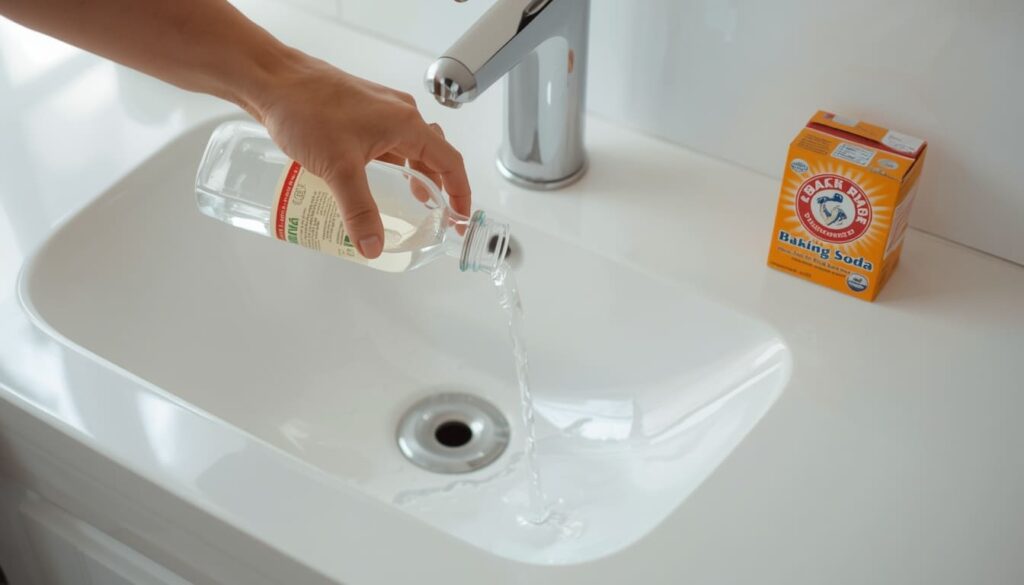
This combination doesn’t work like a chemical drain cleaner — it’s not dissolving a hard clog through brute chemical force. What it does well is break up soft buildup of soap scum and light grease, and it’s completely safe for all pipe types.
Remove any standing water from the sink to expose the drain opening. Measure and pour one third of a cup of baking soda into the drain. Immediately pour one third of a cup of vinegar down after the baking soda.
You’ll hear fizzing — that’s the reaction between the baking soda (a base) and vinegar (an acid). Cover the drain opening with a cloth or stopper to keep the reaction pushing downward rather than back up through the drain. Allow the mixture to fizz and sit for at least one hour. Flush the drain with hot water to wash away the loosened debris.
For a more stubborn buildup, let it sit overnight before flushing. Some homeowners do this monthly as maintenance and find it keeps drains running freely without ever developing a full clog.
Method 4. Use a Plunger
A plunger is the most consistently effective tool for most household drain clogs, and most people use it incorrectly — which is why it sometimes seems like it doesn’t work.
For sinks and tubs, you want a cup plunger: the flat-bottomed kind, not the flanged toilet plunger. Do not use the same plunger you use on your toilet, or at least clean the plunger thoroughly first.
There’s one step most people skip that makes the difference between plunging working and not working. For tub drains, remove the overflow drain cover with a screwdriver and plug the hole by stuffing a cloth rag into it. Run water until there’s an inch or two of standing water in the sink or tub. For bathroom sinks, stuff a wet cloth into the overflow opening — the small hole near the top of the sink basin. For double kitchen sinks, plug the second drain with a wet cloth.
Why does this matter? The overflow opening is a direct air path back out of the drain. If it’s open, every push of the plunger just forces air back out through the overflow instead of pushing the clog down the pipe. Sealing it forces the pressure to go where you want it.
Place the plunger over the drain so it covers it entirely and creates a complete seal. Pump the plunger up and down vigorously for up to half a minute. Watch to see how the water drains. If it stays in the sink, pump the plunger again.
After plunging, run hot water for a minute to flush any dislodged material through the pipe.
Method 5. Use a Drain Snake or Hair Removal Tool
For hair clogs in bathroom sinks, showers, and tubs, nothing beats a physical removal tool. The two most useful options are a plastic drain snake (sometimes called a “Zip-It” or drain stick) and a traditional metal drain snake or auger.
The plastic drain stick is the right first choice for bathroom clogs. It costs around $3, requires no skill to use, and pulls out hair clumps that no amount of boiling water or vinegar will touch.
Insert the drain stick down the drain and through the trap. You may need to twist the tool to find the right angle. Push the tip into the clog as deeply as possible to allow the barbs to hook the material. Remove the drain stick to pull up any material it snags. Run water to wash out any loose debris and clean the drain.
What comes out is usually more than you expected. A significant hair and soap scum mass can build up in the P-trap over months without showing obvious external symptoms until drainage nearly stops.
For clogs further down the line that the plastic stick can’t reach, a metal drain snake or hand auger goes deeper. Feed the flexible metal cable carefully into the pipe. The tip either breaks up the clog or hooks onto the hair mass so it can be pulled back out. If done incorrectly, a snake can scrape the inside of older pipes, so go slowly.
Method 6. Clean Out the P-Trap
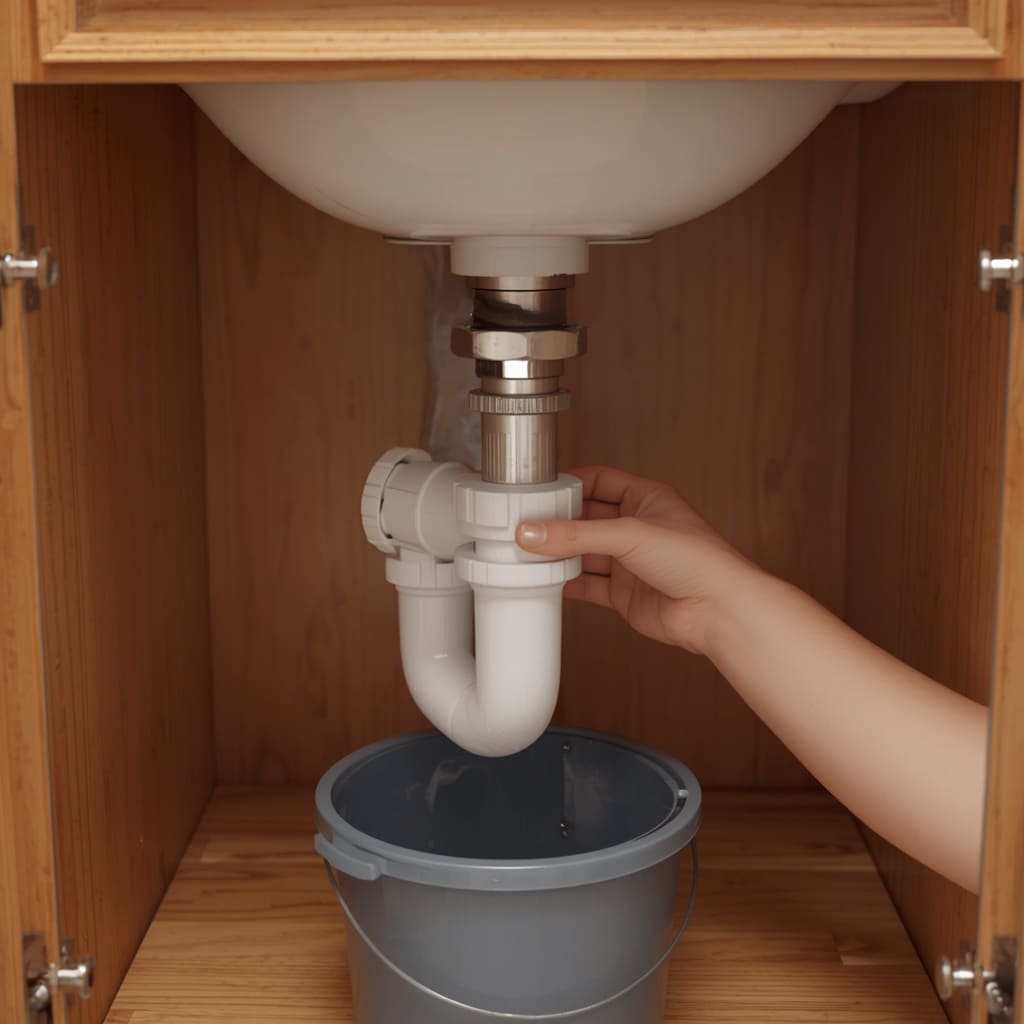
The P-trap is the curved section of pipe directly under your sink — the U-shaped bend you can see when you open the cabinet. Its job is to hold a small amount of water that blocks sewer gases from coming back up through the drain. It’s also where dense, heavy debris likes to collect and sit.
If the methods above haven’t cleared the drain, cleaning the P-trap directly usually will.
Put a bucket under the pipe. The P-trap holds water and it will spill when you open it. Unscrew the two slip-joint nuts by hand — one at each end of the curved section. If they’re stuck, use channel-lock pliers but apply light pressure; plastic P-traps crack if overtightened or forced.
You can also use a hair removal tool or wire hanger to snake directly from the P-trap to reach further into the plumbing than you could by going through the drain.
Dump whatever is in the trap into the bucket. Clean the inside of the trap under running water, check both pipe openings for visible buildup, and reinstall. Hand-tighten the nuts — you don’t need more than snug, and overtightening cracks plastic fittings.
Run water and check under the sink immediately. A slow drip from a fitting you reinstalled is common and usually just needs another quarter-turn to seat properly.
Method 7. Use an Enzyme-Based Drain Cleaner
If you’ve reached this point and the drain is still slow or blocked, a drain cleaner may help — but there’s a meaningful difference between enzyme-based cleaners and traditional chemical ones, and it’s worth understanding before you pour anything.
Enzymatic drain cleaners use natural bacteria and enzymes to break down organic clogs like hair, soap scum, and food waste. They are a safer alternative to chemical cleaners because they won’t damage pipes or release harmful fumes. This method works best for mild or slow clogs that build up over time.
Our experts cautioned against overusing chemical cleaners to clear clogs, as these harsh acids can damage and corrode sensitive pipes. Traditional chemical drain cleaners like those with lye or sulfuric acid work fast but generate significant heat, and in older or plastic pipes that heat causes real long-term damage. If you later need to work on the pipes yourself, residual chemical cleaner in standing water is genuinely dangerous.
Enzyme cleaners work more slowly — often overnight — but they’re safe for all pipe types, safe to use regularly, and won’t create a hazard if you eventually need to snake the drain after using them.
Read the product label to understand the specific directions for your cleaner. Put on rubber gloves to protect your hands. Pour the cleaner directly into the drain. Let it sit for the amount of time listed, often overnight for best results. Rinse with warm water to flush away debris.
A Note on Chemical Drain Cleaners
Since they’re the first thing most people reach for, it’s worth being direct about this. Traditional chemical drain cleaners are not the best first option for most clogs. Water that isn’t draining can cause damage to your drainpipes, especially if you resort to using caustic drain cleaners. This could lead to corrosion and leaks.
For a hair clog, a $3 plastic drain stick will outperform a $10 bottle of chemical cleaner and won’t damage your pipes in the process. For a grease clog, hot water poured slowly does the same work without the fumes. Reserve chemical cleaners for situations where physical methods have already failed and you’ve confirmed the pipe material can handle them.
When to Stop and Call a Plumber
Most clogs in individual drains clear with the methods above. But a few situations genuinely require professional tools or diagnosis.
You should call a plumber if multiple drains in your home are slow at the same time — this indicates a main line issue. You should also call if water backs up into the shower when you run the bathroom sink, or if you smell sewage, which could indicate a dried-out or broken P-trap.
A single drain that you’ve tried everything on and it still won’t clear usually means the clog is further down the line than a household drain snake can reach. A plumber’s motorized auger can clear blockages 50 feet or more down the line.
Plumbing problems have a way of starting small and becoming expensive when ignored. A slow drain is annoying. A backed-up main sewer line is a several-thousand-dollar emergency. If you’re also dealing with other plumbing issues around the house — say, a running toilet that hasn’t been fixed yet — it’s worth addressing these together rather than letting small problems stack up.
How to Keep Drains from Clogging Again
Once the drain is clear, keeping it that way takes almost no effort.
Hair is the biggest cause of bathroom drain clogs. A pop-up stopper with a built-in hair catcher, or a simple drain strainer, can prevent hair and other small items from entering the pipe. These cost $3 to $10 and are the single most effective preventive measure available.
Never pour grease down the drain. Although it might seem like a convenient way to dispose of it, grease poured down the drain harms your pipes as it solidifies and can lead to total blockages. Let grease cool in the pan, pour it into an old jar or bag, and throw it in the trash.
Regularly flush your drains with hot water. This helps dissolve soap scum and keeps debris from sticking to the pipes. Occasionally pour a mixture of baking soda and vinegar down the drain followed by hot water — this keeps drains clean and prevents clogs from forming.
For a deeper look at how drain systems work and how household plumbing is structured, the Wikipedia article on drain-waste-vent systems is a solid reference that explains why clogs form where they do and how air pressure affects drainage throughout your home.
FAQ
What is the fastest way to unclog a bathroom drain?
For most bathroom clogs, a plastic drain stick (Zip-It tool) is the fastest option. It costs about $3 at any hardware store, inserts directly into the drain, and physically pulls out the hair and soap scum that are causing the blockage. It takes less than five minutes and works on the majority of bathroom sink and shower clogs without any chemicals or waiting.
Why does my drain keep clogging even after I clean it?
Hair clogs become more stubborn over time as they trap soap scum and other debris around them. If the same drain keeps clogging frequently, it usually means hair or grease is still accumulating faster than your cleaning routine addresses it. Install a drain strainer to catch debris before it enters the pipe, and do a baking soda and vinegar flush once a month. If a drain you’ve cleaned still clogs within days, the blockage may be further down the line than you’re reaching.
Can I use boiling water on all types of pipes?
No. Boiling water is safe for metal pipes but can soften or warp PVC plastic pipes and loosen the glued joints over time. If your home has PVC drain lines — common in homes built or replumbed after the 1970s — use the hottest water from your tap instead of water that has been boiled.
Is it safe to use a chemical drain cleaner if nothing else works?
You can use one as a last resort before calling a plumber, but choose an enzyme-based product rather than a traditional lye or acid-based cleaner whenever possible. Harsh chemical cleaners can damage and corrode sensitive pipes when overused. Also never mix different drain cleaners or use a chemical cleaner right after plunging — the splashback from plunging after a chemical application can cause serious chemical burns.
Why does my drain smell bad even when it’s draining fine?
A foul smell with no drainage problem usually means the P-trap has dried out. The P-trap holds a small amount of water that blocks sewer gases from coming back up the pipe. If a sink hasn’t been used in weeks — a guest bathroom, basement sink, or vacation home — the water in the trap evaporates. Run the water for 30 seconds to refill the trap and the smell will go away. If the smell persists on a regularly used drain, there may be buildup in the pipe or a venting issue.
How do I unclog a double kitchen sink?
To prep for unclogging double-basin kitchen sinks, firmly plug one of the drains with a wet cloth rag to seal it before plunging the other side. This forces pressure in the right direction rather than pushing air from one basin to the other. Also check whether your garbage disposal is connected to the drain — if it is, rule out a disposal jam first by pressing the reset button on the bottom of the unit before attempting any other method.
When does a slow drain mean something serious?
A single slow drain almost always has a local cause — hair, grease, or soap scum — that you can fix yourself. The situation changes when multiple drains in the house are slow or backing up at the same time. That points to a blockage in the main drain line or a sewer issue, neither of which responds to household methods. Other warning signs include gurgling sounds from drains when you run water elsewhere, or water backing up in a floor drain when you flush a toilet. All of these warrant a call to a licensed plumber.