
If your toilet has been running nonstop for days, you’re not alone — and you don’t need to call a plumber. Most running toilet repairs take less than 30 minutes, cost under $15 in parts, and require zero plumbing experience. The fix is almost always one of three things: a worn flapper, a float that’s sitting too high, or a fill valve that’s given out.
This guide will help you figure out which one is causing your problem and walk you through fixing it yourself.
Why This Is Worth Fixing Today
A running toilet isn’t just annoying. It wastes serious water. A running toilet can waste up to 200 gallons of water per day, adding $50 or more to your monthly water bill. That’s money going straight down the drain every single day you put it off.
The good news is that the parts responsible for this are cheap, easy to find at any hardware store, and take minutes to swap out. Once you know what you’re looking for, this is one of the most satisfying home repairs you can do yourself.
Step 1. Take the Lid Off and Watch
Before you buy anything or touch any part, take the lid off the tank and just observe for 30 seconds. Set the lid on a towel — porcelain cracks easily on hard floors.
Here’s what to look for:
Water trickling into the bowl between flushes. This is a leaking flapper. It’s the most common cause and the easiest fix.
The fill valve turning on and off every few minutes on its own. This is called a phantom flush. The tank slowly loses water through the flapper, drops just enough to trigger the fill valve, and the cycle repeats. Still a flapper issue.
Water visibly flowing into the tall tube in the center of the tank. That’s the overflow tube. If water is going into it, your float is set too high or your fill valve has failed.
Once you identify which of these you’re seeing, you know exactly what to fix.
What You’ll Need
You probably won’t need all of this — just pick up what matches your situation:
- Adjustable pliers
- Flathead screwdriver
- Universal toilet flapper (2-inch fits most toilets; some newer models use 3-inch — check before you buy)
- Toilet fill valve kit (Fluidmaster 400A is the most reliable option)
- Small sponge and a bucket
- Food coloring (optional but helpful for testing)
Total cost if you need everything: under $20.
Fix 1. Replace the Flapper
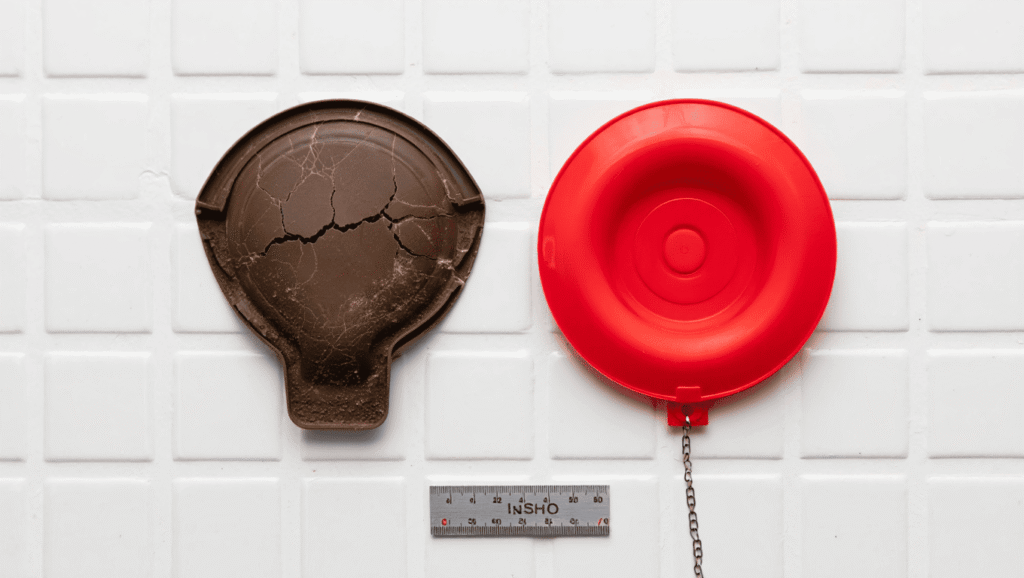
This is the right fix if water is trickling into the bowl or you’re seeing phantom flushes. A worn or damaged flapper is one of the most common causes of a running toilet. The rubber degrades over time, warps, or collects mineral buildup and stops sealing the way it should.
The dye test. Before you buy anything, drop 5 to 10 drops of food coloring into the tank. Wait 15 minutes without flushing. If the colored water appears in the bowl, that confirms the flapper isn’t sealing tightly and water is leaking from the tank into the bowl. If the bowl stays clear, the flapper is fine and you can skip ahead to Fix 2.
How to replace it:
Turn off the water supply valve. It’s the oval knob on the wall behind and below the toilet. Turn it clockwise until it stops. Flush once to empty the tank, then use a sponge to soak up whatever water remains at the bottom.
Unhook the two “ears” on the sides of the flapper from the pegs on the overflow tube. Then disconnect the chain from the flush lever arm. The whole flapper just lifts off.
Run your finger around the rim of the drain opening (the flush valve seat). If the seat has minor corrosion or buildup, clean it with a scouring pad. A rough seat will ruin a new flapper just as fast as the old one.
Snap the new flapper’s ears onto the pegs. Attach the chain to the flush lever. The chain needs exactly the right amount of slack — about 1/2 inch. If the chain is too short, it holds the flapper slightly open, causing a constant leak. If it’s too long, it can get caught under the flapper and prevent a full seal.
Turn the water back on and let the tank fill. Drop some food coloring in and wait 15 minutes. If the bowl stays clear, you’re done.
One thing to check if it’s still running: Look at whether the chain is caught underneath the flapper. This is the most common reason a brand-new flapper still leaks.
Fix 2. Adjust the Float
If water is flowing into the overflow tube, the water level in your tank is too high. The float is what tells the fill valve to stop — when it’s set too high, the tank overfills and water spills into the overflow tube constantly.
There’s a quick way to confirm this is the problem. Reach into the tank and lift the float by hand while the water is running. If the water stops, the float just needs adjustment. If it keeps running with the float held up, the fill valve itself has failed and you need Fix 3.
If you have a ball float (older toilets): This looks like a round rubber ball on a metal arm. To reduce the water level in a float ball, gently bend the floating arm downward. Flush and check. The water level should stop about 1 inch below the top of the overflow tube.
If you have a cup float (most toilets made in the last 20 years): This is a cylindrical float that slides up and down on the fill valve shaft. Turn the adjustment screw clockwise to lower the water level. Flush and recheck. Adjust again if needed.
Fix 3. Replace the Fill Valve
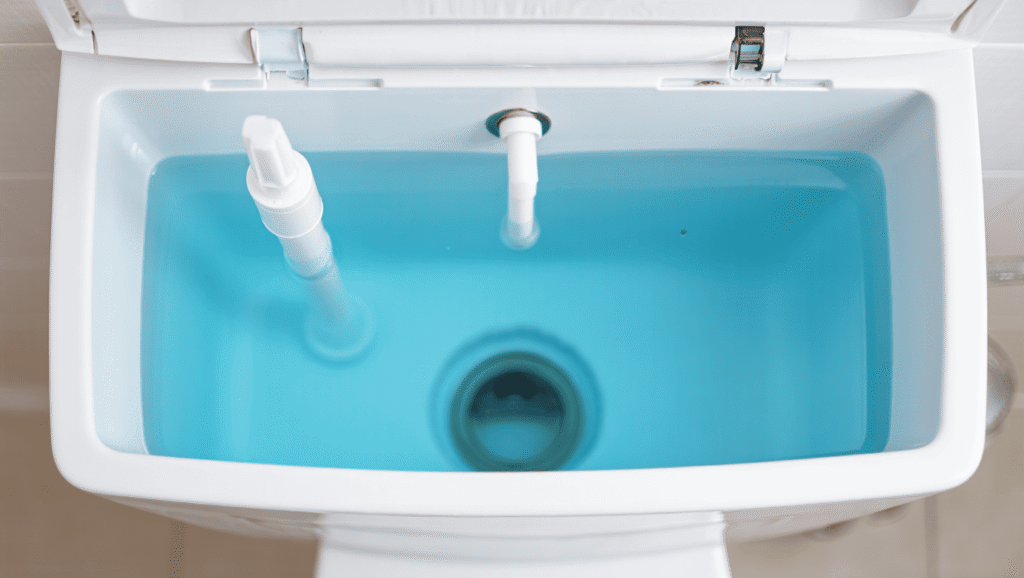
If adjusting the float didn’t help, or if the fill valve hisses constantly even with the float in the right position, the valve has worn out. A Fluidmaster 400A is the most reliable replacement, available at any hardware store for around $10 to $15.
Turn off the water supply valve, flush the toilet, and sponge out the remaining water. Put a towel or small bucket under the tank — it will drip when you disconnect the supply line.
Unscrew the water supply line from the bottom of the tank by hand. If it’s stuck, use pliers but be gentle. Porcelain tanks crack if you push too hard.
Unscrew the locknut underneath the tank where the fill valve passes through. Lift the old fill valve straight up and out. Disconnect the small refill tube from the overflow pipe.
Insert the new fill valve into the tank and tighten the locknut a half turn past hand tight. Set the height so the fill valve’s critical level mark sits at least 1 inch above the overflow tube. Attach the refill tube to the overflow pipe using the included angle adapter.
Reconnect the supply line, turn the water on slowly, and watch the tank fill. The water should stop about 1 inch below the top of the overflow tube. Flush three or four times and listen for any hissing between flushes.
How Much You’ll Save Doing This Yourself
| Repair | Parts Cost | Plumber Cost | You Save |
|---|---|---|---|
| Flapper replacement | $5 to $10 | $100 to $200 | $90 to $190 |
| Float adjustment | $0 | $75 to $150 | $75 to $150 |
| Fill valve replacement | $10 to $15 | $150 to $250 | $135 to $235 |
When to Actually Call a Plumber
These fixes cover the vast majority of running toilets. But there are situations where calling someone in makes sense.
If you see water pooling around the base of the toilet after doing these repairs, the problem is the wax ring seal under the toilet — not the tank. That one requires lifting the entire toilet and is better left to a pro.
If the shutoff valve behind the toilet is seized and won’t close, don’t force it. Forcing an old shutoff valve can cause it to break entirely, flooding the bathroom. A plumber can swap it out by briefly shutting off your home’s main water supply.
And if you’ve replaced the flapper, adjusted the float, and replaced the fill valve and it’s still running — there may be a crack or damage in the flush valve seat itself. That’s less common but does happen, and it usually means replacing the entire flush valve assembly.
Everything else in this article? You can handle it yourself before lunch.
A Note on Older Toilets
If your toilet is more than 8 to 10 years old, consider buying a complete tank rebuild kit. It replaces the flapper, fill valve, and flapper seat all at once for $25 to $40. You’ll eliminate every possible internal cause of running in a single 45-minute job and won’t have to open the tank again for years.
It’s a smarter move than replacing one part at a time and still having the toilet start running again three months later.
FAQ
How do I know if it’s the flapper or the fill valve causing my toilet to run?
The easiest way is the food coloring test. Drop several drops into the tank and wait 15 minutes without flushing. If color appears in the bowl, the flapper is leaking. If the bowl stays clear but the fill valve keeps running, the problem is the float setting or the fill valve itself. You can also lift the float by hand while the water is running — if that makes it stop, the float just needs adjustment. If it keeps going, the fill valve has failed.
My toilet runs for a few seconds every hour even when no one used it. What is that?
That’s called a phantom flush. The tank slowly loses water through a leaking flapper, drops just enough to trigger the fill valve, tops itself off, and the cycle repeats. It’s quieter and more intermittent than a toilet that runs constantly, but it wastes just as much water over time. Replacing the flapper almost always solves it.
I replaced the flapper and the toilet is still running. What should I check?
First, check the chain. If there’s too much slack, it can get trapped underneath the flapper and prevent it from sealing. Also check that both ears of the flapper are properly seated on the pegs and that the flush valve seat (the rim the flapper sits on) is clean and smooth. If everything looks right and it’s still running, move to the float and fill valve.
Can I replace a toilet flapper without turning off the water?
Technically yes, but it’s messy and harder to work with a full tank. Shutting off the supply valve first takes five seconds and makes the whole job cleaner. The shutoff valve is the knob on the wall behind and below the toilet. Turn it clockwise to close.
How long does a toilet flapper last?
Most rubber flappers last 4 to 8 years under normal conditions. They wear out faster if you use in-tank bleach tablets, which break down rubber much quicker. If you use those tablets and the flapper fails every year or two, switch to a chlorine-resistant flapper or stop using the tablets.
How much water does a running toilet actually waste?
It depends on the leak. A slow phantom flush might waste 30 to 50 gallons a day. A moderately running toilet wastes around 200 gallons per day. A toilet with a fully open flapper can waste over 1,000 gallons a day. At average US water rates, even a moderate leak adds $30 to $70 per month to your bill.
Is the water inside the toilet tank safe to touch?
Yes. Tank water comes directly from your household supply and has never contacted the bowl. It’s the same water that flows from your sink. That said, tanks can accumulate sediment and mineral buildup over time, so washing your hands after is a good habit.
When should I just replace the entire toilet instead of repairing it?
If the toilet is 20 or more years old and you’re doing repairs every year, it may be more cost-effective to replace it. Modern low-flow toilets use 1.28 gallons per flush versus the 3.5 to 7 gallons older models use. The water savings alone can offset the cost of a new toilet within a few years. You should also consider replacement if you find cracks in the porcelain tank or bowl — those cannot be repaired.